
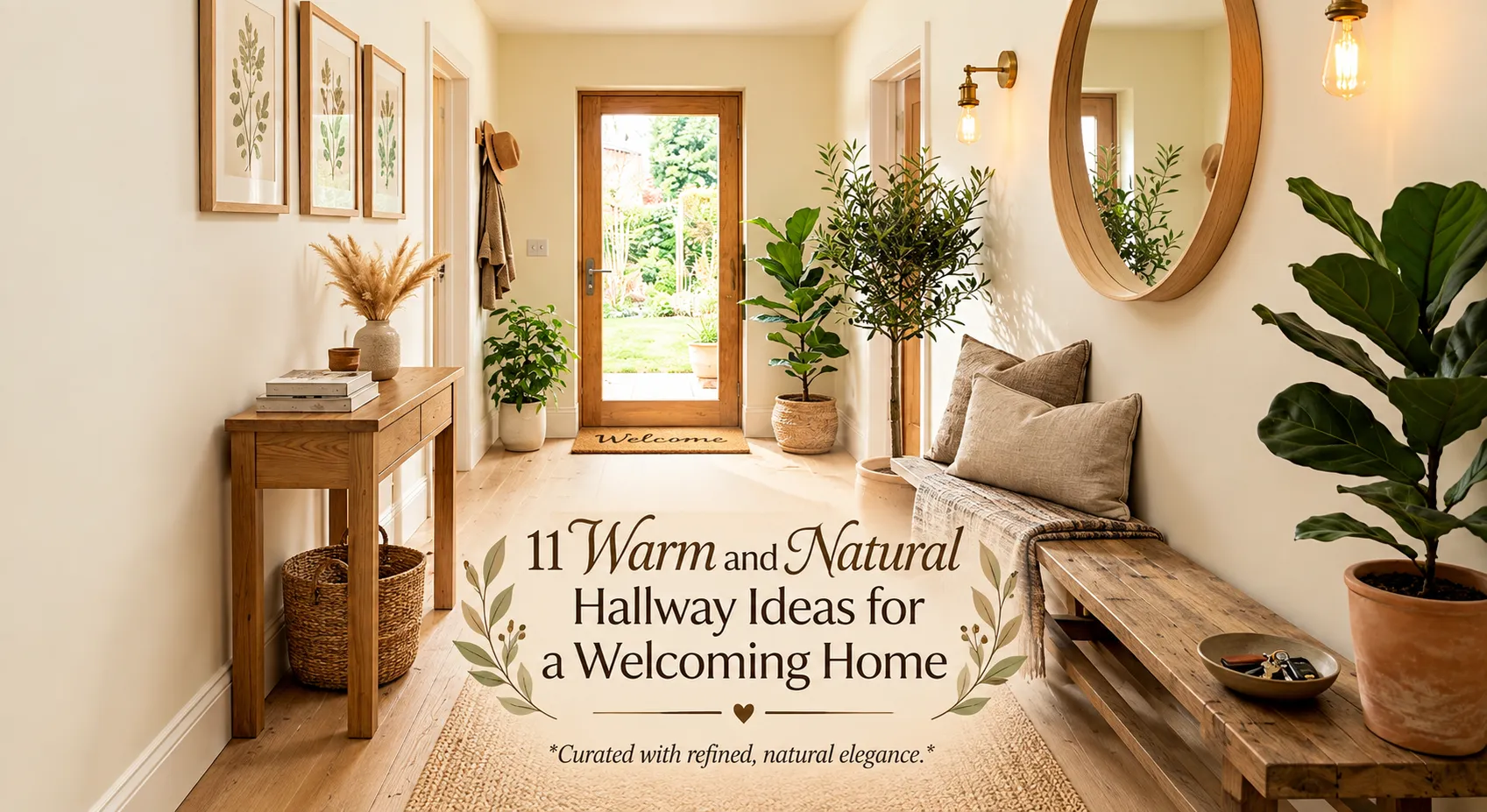
11 Warm and Natural Hallway Ideas for a Welcoming Home
Hallways are often treated as simple passthroughs, but they set the visual tone for your entire home. A cold, dim corridor can make a house feel utilitarian, while a hall detailed with natural materials, layered organic textures, and thoughtful illumination creates an immediate sense of welcome. Grounding your entry corridors in natural elements doesn’t require a complete structural overhaul. By focusing on wood grains, tactile textiles, organic shapes, and soft light, you can turn a tight transit zone into a cozy, intentional design statement that seamlessly bridges your main living spaces. Here are 11 distinct, practical ideas to infuse warmth and natural character into your hallway.
1. Ground the Corridor With a Chunky Jute Runner
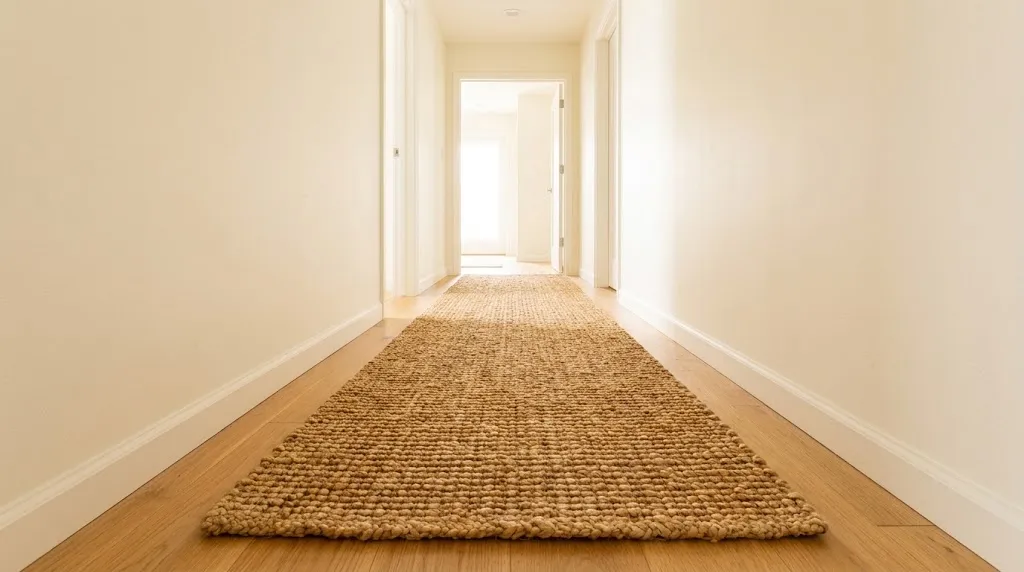
A long, woven natural-fiber runner immediately anchors a hallway, softening foot traffic noise while introducing tactile texture underfoot.
- Material & Craft: Look for chunky, hand-woven jute, sisal, or seagrass with a visible, thick weave pattern.
- Proportions: Maintain 4 to 6 inches of bare floor exposed on either side of the rug so the hall doesn’t feel cramped.
- Underfoot Care: Always place a thick felt rug pad beneath natural fiber runners to prevent slipping on hardwood or tile and to add cushioning.
- Warm Tone Selection: Choose bleached or honey-toned jute over cooler greys to establish an inviting, organic foundation.
2. Install Vertical Oak Slats for Architectural Depth
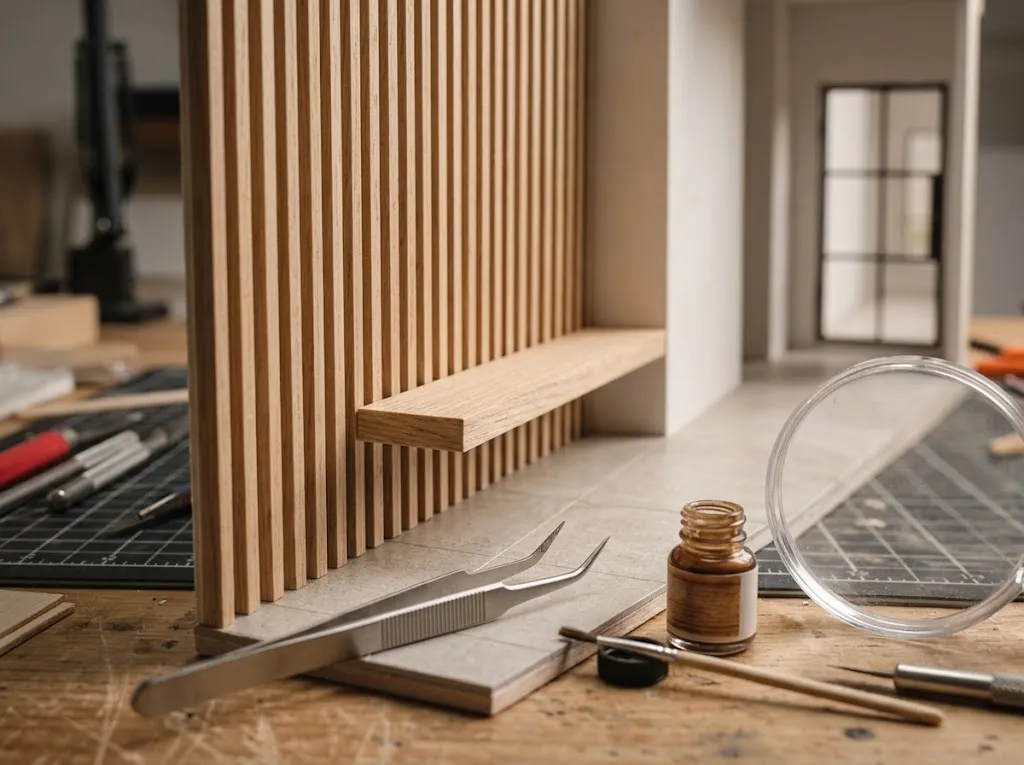
Running vertical wood battens or a wood slat accent wall adds texture, hides minor wall imperfections, and visually draws the eye upward, making standard-height ceilings feel taller.
Quick Facts:
Best For: Long, flat walls that lack architectural detail
Investment: Mid-range to Premium
Visual Effect: Modern warmth with strong linear structure
Using light-to-medium tones like natural oak, ash, or warm walnut keeps the feature from feeling overly heavy. If paneling the entire length feels overwhelming, apply wood slats along a single accent wall or wrap them around an entry corner.
3. Position a Shallow Raw-Wood Console Table

A slim console table provides a functional dropping zone for keys and mail without obstructing the central walkway.
| Feature | Design Standard | Why It Matters |
| Depth | 10 to 14 inches maximum | Preserves comfortable walking clearance (minimum 36 inches total path) |
| Material | Reclaimed timber or live-edge wood | Shows natural grain, knots, and organic character |
| Styling | Asymmetric grouping (e.g., lamp + ceramic bowl) | Creates a balanced, uncluttered focal point |
A raw or wire-brushed finish reflects light differently than slick varnish, adding an authentic, tactile touch to the corridor.
4. Frame Light with an Oversized Organic-Shape Mirror

Corridors frequently lack direct windows, relying on light borrowed from adjacent rooms. An asymmetrical or softly rounded wood-framed mirror reflects ambient light deeper into the space while visually expanding narrow walls.
Common Mistake: Hanging a small, high-mounted mirror that feels disconnected from the rest of the decor.
Better Approach: Choose an oversized, asymmetrical or pebble-shaped mirror with a subtle oak or walnut frame. Hang it low enough—roughly eye level (center of the mirror 57–60 inches from the floor)—so it anchors a console table or wall hooks below it.
5. Group Woven Baskets for Discreet Storage
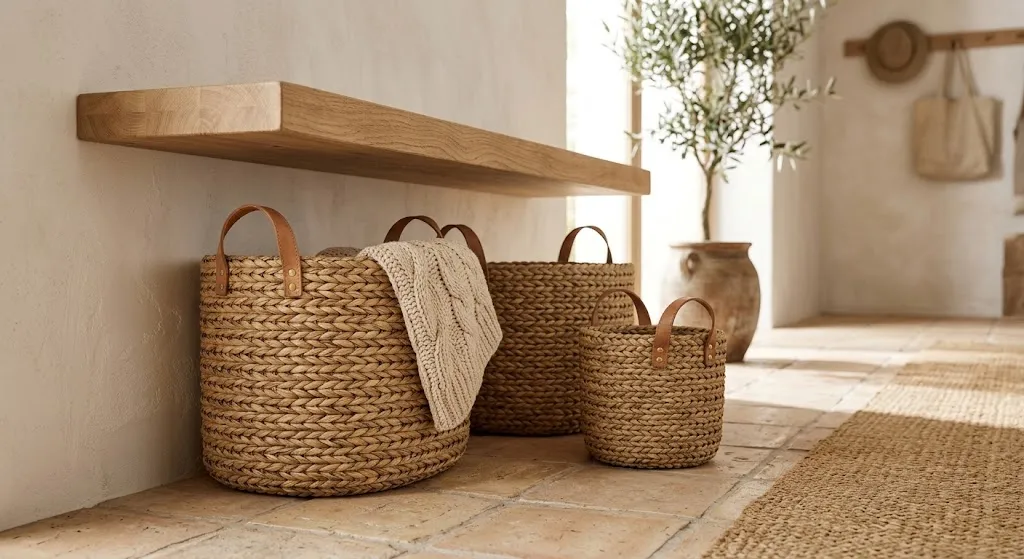
Baskets made from seagrass, rattan, or water hyacinth offer an accessible solution for controlling hallway clutter while adding a layer of cozy woven texture.
- Select Varying Sizes: Nest a pair or set of three graduated round baskets underneath a console table or floating bench.
- Assign Specific Roles: Use one for shoes, one for umbrellas or dog leashes, and another for seasonal scarves or canvas totes.
- Choose Structured Weaves: Firm, thick-braided baskets hold their shape far better in high-traffic zones than soft collapsible totes.
6. Introduce Low-Maintenance Indoor Greenery
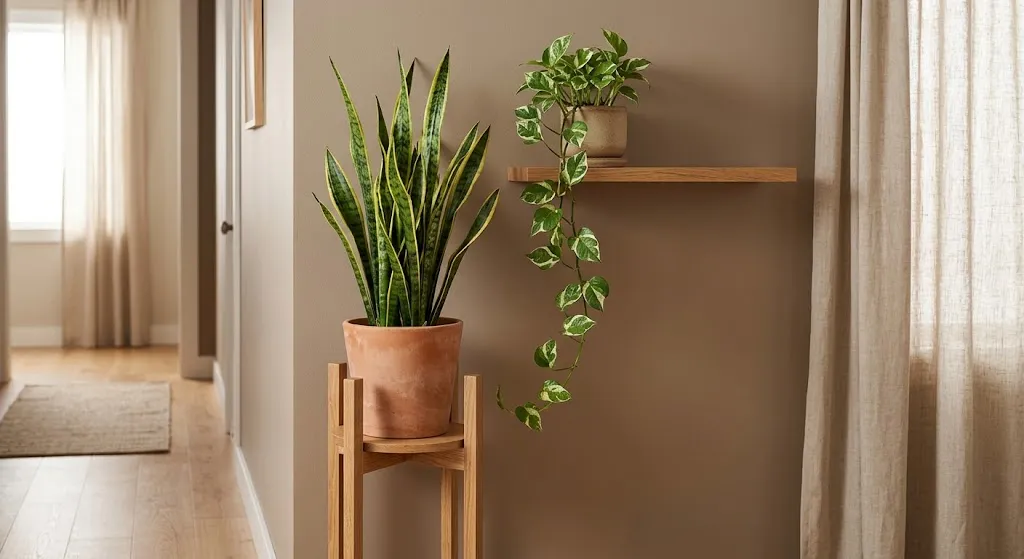
Plants instantly bring vitality to long, sterile passages. Because hallways often receive indirect or lower light, choosing forgiving, shade-tolerant varieties ensures your greenery thrives without constant intervention.
- Top Low-Light Varieties: Snake plants (Sansevieria), ZZ plants (Zamioculcas zamiifolia), Pothos, and Cast Iron Plants (Aspidistra elatior).
- Planter Materials: Pair foliage with matte terracotta, unglazed stoneware, or rattan planter stands to keep the palette organic.
- Vertical Elevation: Use a hanging trailing pothos from a brass wall bracket if floor space is strictly limited.
7. Install a Natural Oak Peg Rail
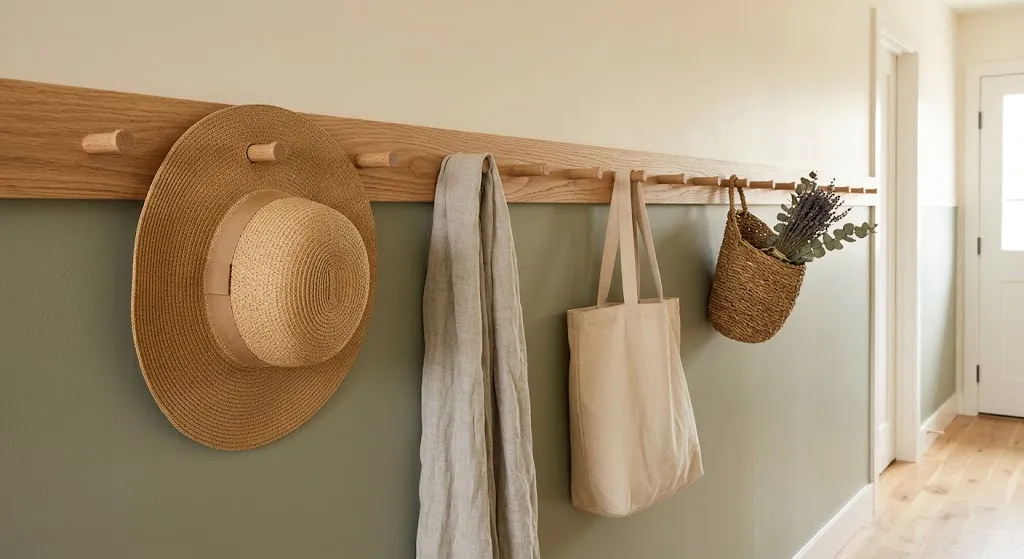
A continuous wall-mounted shaker-style peg rail offers a functional hanging solution that acts as a practical design detail along the corridor wall.
Editor’s Note: Instead of mounting short, isolated hook racks, run a peg rail across a significant portion of a wall—or wrap it around a corner. Paint the wall below the rail a warm muted shade (like sage or warm beige) and leave the rail in raw or oiled oak for a two-tone custom look.
Use the pegs to hold natural textiles: canvas market bags, brimmed straw hats, linen scarves, or a hanging bundle of dried lavender to maintain the organic theme.
8. Layer Warm Plaster or Lime-Wash Wall Treatments

Standard flat wall paint can leave long hallways feeling boxy and cold. Lime-wash, micro-cement, or textured plaster wall finishes add subtle tonal variations that catch the light, creating an inviting, Old-World depth.
- Color Palette: Stick to warm stone, soft linen, oatmeal, or pale terracotta tones.
- Lighting Synergy: Combine textured wall treatments with warm-temperature lighting (2700K) to highlight the velvety, matte movement in the plaster.
- Durability Note: Apply a breathable, matte sealer over lime-wash or plaster in hallways to protect high-touch areas from scuffs and fingerprints.
9. Upgrade to Warm Linen and Brass Wall Sconces
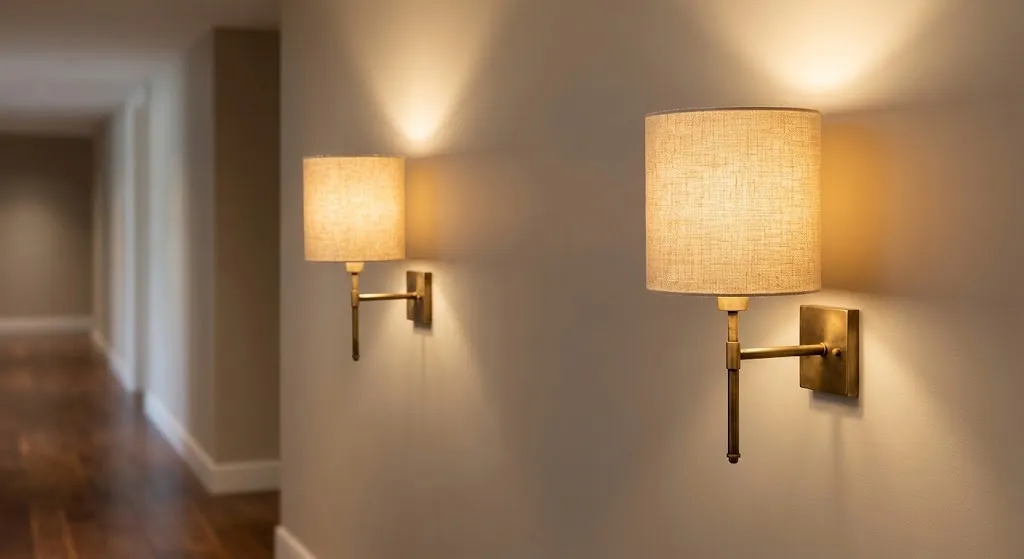
Overhead recessed can lights often cast harsh, downward shadows in narrow corridors. Replacing or supplementing ceiling lights with warm, eye-level sconces creates a gentle, hotel-like ambiance.
| Element | Recommended Choice | Visual Result |
| Shade Material | Natural off-white linen or pleated paper | Softly diffuses light horizontally |
| Metal Finish | Unlacquered brass or aged bronze | Develops a natural patina over time |
| Bulb Temperature | 2700K (Warm White) | Eliminates clinical glare; enhances wood tones |
Distribute sconces evenly along long walls to create an inviting rhythm of light and shadow as you walk through.
10. Incorporate a Built-In Oak Bench with Linen Seating
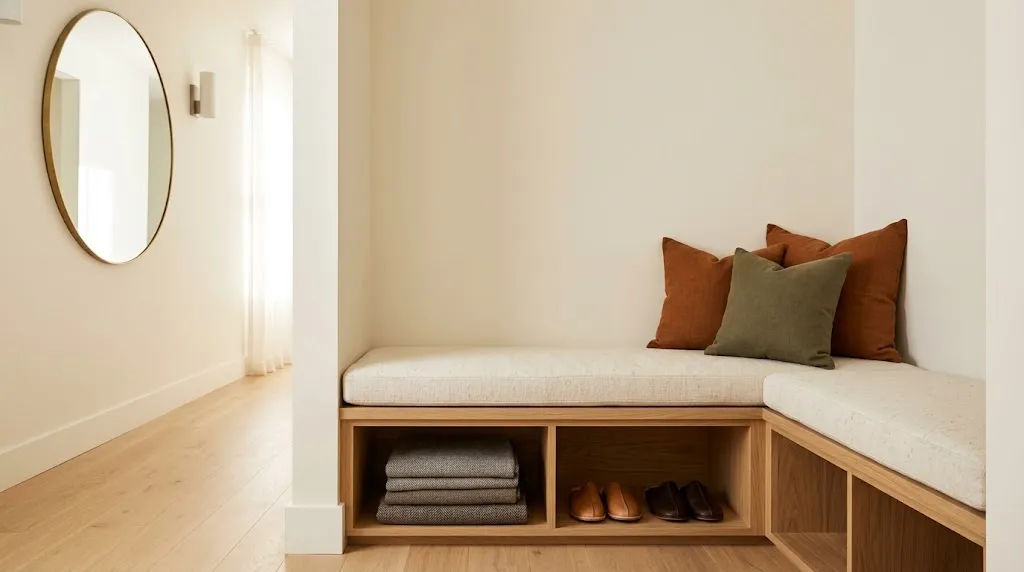
If your hallway has a nook or sufficient width, a low oak bench transforms an unused passage into a welcoming transitional space.
Tips & Tricks:
- Upholstery: Cover a thick bench cushion in durable, high-texture fabrics like heavy Belgian linen, boucle, or slubbed cotton-linen blends.
- Under-Bench Function: Leave the space beneath the bench open for low baskets or built-in cubbies to keep shoes off the main floor.
- Accent Pillows: Toss two or three earth-toned linen pillows (olive, ochre, or rust) in one corner to add color without overwhelming the quiet palette.
11. Curate a Frame-Matched Botanical Gallery Wall

A gallery wall elevates an expanse of blank hallway drywall, but using mismatched plastic or glossy chrome frames can quickly look chaotic. A structured collection of wood-framed botanical prints adds cohesive, nature-inspired visual interest.
Common Mistake: Using random frame styles and chaotic grid layouts that clutter a narrow passage.
Better Approach: Choose 4 to 6 uniform natural oak frames arranged in a simple horizontal line or a tight two-tier grid. Select vintage botanical sketches, pressed leaf prints, or subtle landscape photography printed on textured matte paper.