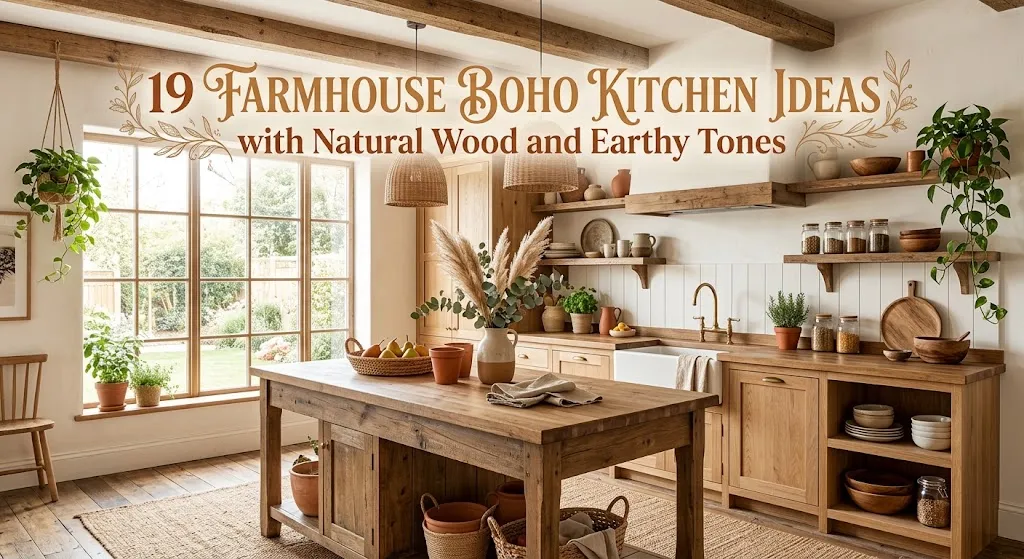
19 Farmhouse Boho Kitchen Ideas with Natural Wood and Earthy Tones
The farmhouse kitchen has long been celebrated for its functional layout and welcoming hearth-like core, while bohemian style brings an effortless layer of warmth, global texture, and organic soul. When these two aesthetics merge, the result is a kitchen that feels deeply personal, grounded, and lived-in rather than overly staged. By combining sturdy structural elements like exposed wood and classic cabinetry with earthy tones, handmade ceramics, and relaxed textiles, you create a cooking space that balances clean utility with bohemian comfort. Whether you are planning a complete renovation or looking for high-impact cosmetic updates, these nineteen design concepts explore how natural materials and rich, muted palettes can completely redefine the heart of your home.
1. Exposed Reclaimed Wood Beams and Open Shelving

Pairing structural warmth with functional display, exposed reclaimed wood beams anchor a kitchen’s ceiling while matching open shelving lightens the wall space above the counters. This dual approach draws the eye upward, making standard-height ceilings feel more architectural and substantial.
- Use thick, unvarnished oak or chestnut planks for the shelves to maximize organic grain visibility.
- Style the shelves sparingly with everyday stoneware, stacked wooden boards, and a trailing pothos plant.
- Balance the rustic wood tones with smooth plaster or simple matte white walls to keep the room feeling airy.
2. Terracotta Floor Tiles with Hand-Pressed Character
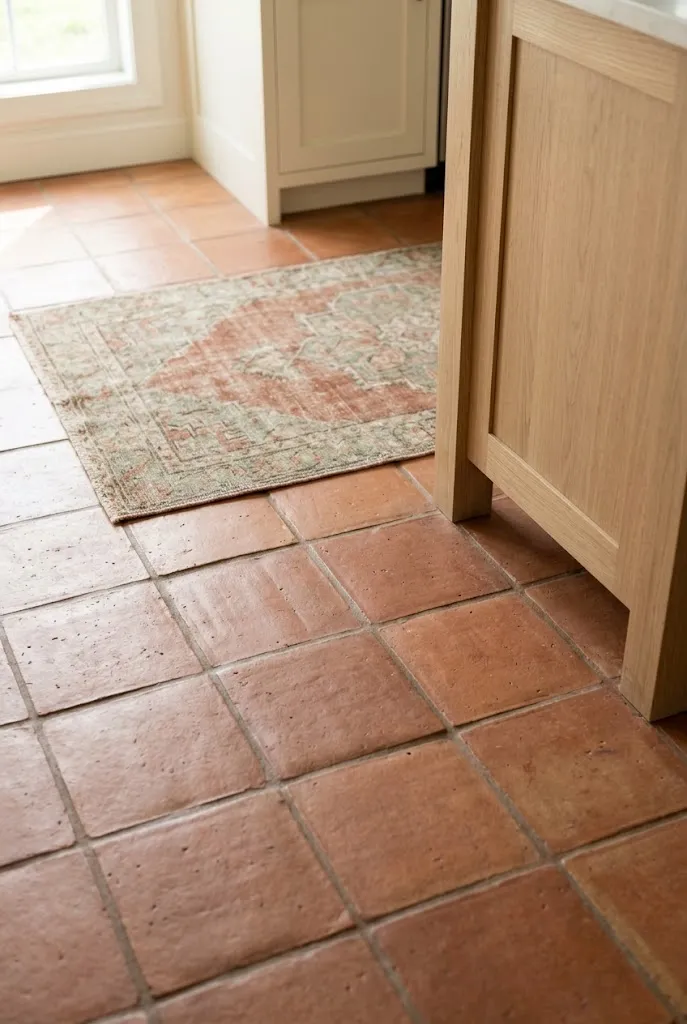
Flooring sets the tactile foundation of an earthy kitchen. Terracotta tiles bring an immediate sense of history, warmth, and grounded texture underfoot, aging gracefully with daily foot traffic.
- Choose unglazed or lightly sealed square or hexagon terracotta tiles to retain their authentic, porous matte finish.
- Pair the warm rust and clay undertones with creamy off-white cabinetry to keep the overall palette balanced.
- Layer a vintage, low-pile runner rug over the center floor for added softness and color contrast.
3. Matte Olive Green Lower Cabinets

Introducing color through cabinetry prevents an all-wood or all-white kitchen from feeling flat. Muted, nature-inspired hues like deep olive or sage green connect the interior space with the outdoors.
Common Mistake: Choosing bright, saturated greens that clash with warm wood tones.
Better Approach: Opt for desaturated, gray-undertoned olives or eucalyptus greens that read almost like a neutral in changing daylight.
4. Zellige Tile Backsplash in Warm Neutral Tones
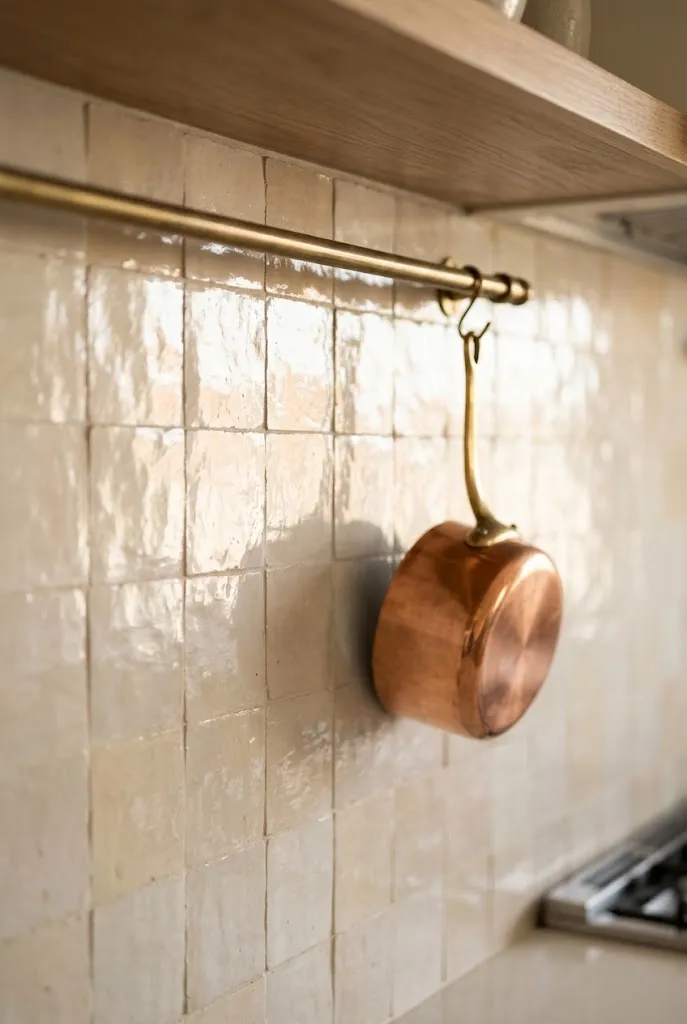
Hand-clay zellige tiles introduce a subtle, light-catching variation that machine-made ceramic tiles simply cannot replicate. Their slightly uneven surfaces and tonal shifts bring handcrafted texture to the vertical plane behind the stove or sink.
- Select a palette of warm bone, linen, or soft almond to keep the backsplash luminous.
- Leave grout lines slightly organic and flush with the tile edges for a traditional, artisanal look.
- Extend the tile all the way to the ceiling around the range hood to create a seamless focal point.
5. Live-Edge Wood Island Countertop

A center island serves as the primary gathering spot in an open-concept home. Replacing a standard manufactured slab with a live-edge wood countertop introduces an organic silhouette and raw, tactile beauty.
| Wood Choice | Grain & Tone | Best Fit For |
| Walnut | Rich, dark chocolate tones with striking grain | High-contrast, moody boho spaces |
| White Oak | Pale, golden-tan with a durable, steady grain | Airy, sun-drenched Scandinavian-farmhouse fusion |
| Teak | Warm amber with high natural oil resistance | Heavy daily prep areas and washing zones |
6. Rattan and Woven Pendant Lighting
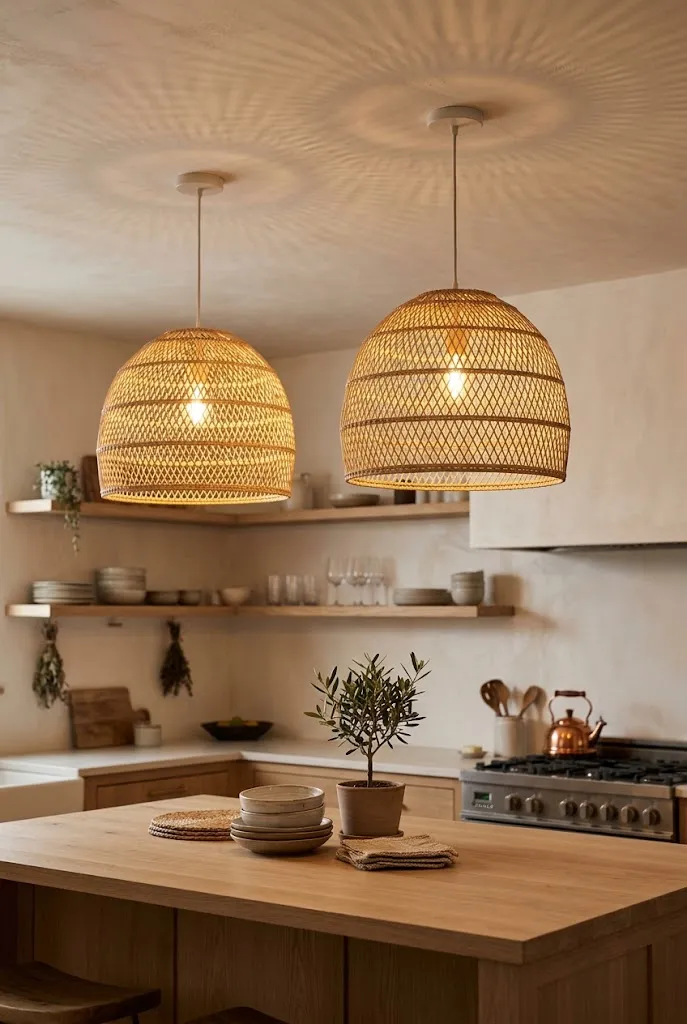
Lighting fixtures act as the jewelry of the kitchen. Incorporating oversized woven pendants made from rattan, bamboo, or seagrass injects an immediate layer of bohemian texture and relaxed overhead scale.
- Hang pendants low over an island or dining nook to create an intimate, cocooning effect.
- Choose open-weave designs that allow light to filter through, casting delicate shadows across the ceiling and walls.
- Combine natural fiber shades with warm LED bulbs (around 2700K) to enhance the golden tones of the wood.
7. Plaster-Finished Range Hood

Traditional wood or stainless steel range hoods can sometimes feel heavy or sterile. Encasing the ventilation hood in a seamless lime-wash or Venetian plaster finish introduces a soft, monolithic architectural curve reminiscent of old-world European farmhouses.
- Keep the plaster tone slightly warm—think oatmeal, gypsum, or soft travertine.
- Leave the texture subtly hand-troweled so it catches low-angled daylight.
- Anchor the base of the hood with a small oak spice ledge for functional everyday convenience.
8. Vintage Runner Rugs with Faded Earthy Hues
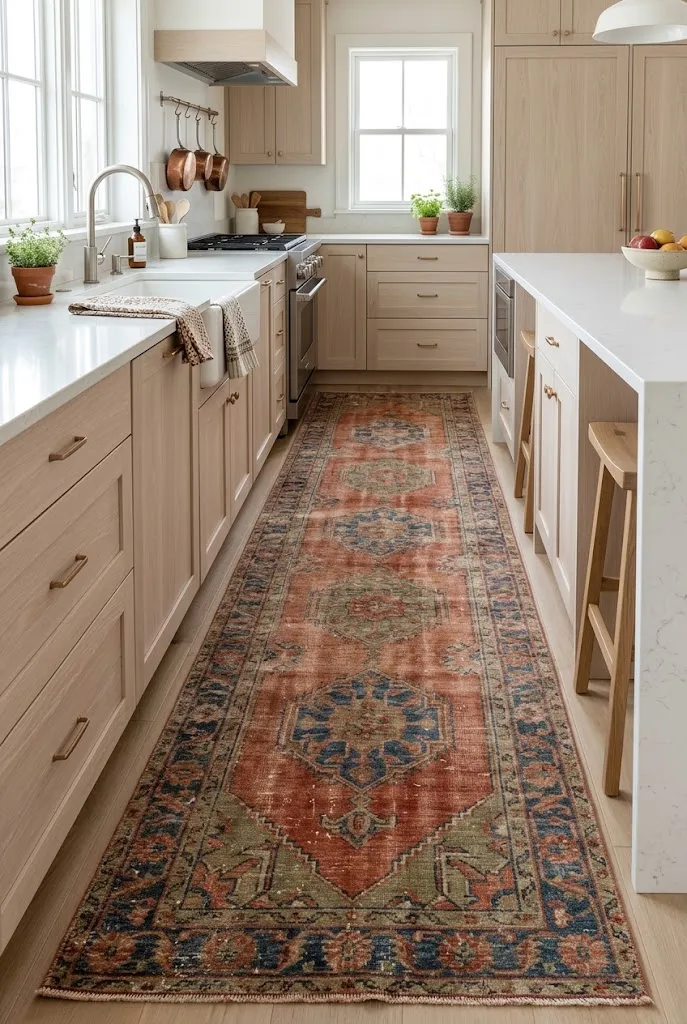
Kitchen floors endure heavy wear, but hard surfaces can feel cold during meal prep. Introducing a vintage or vintage-style runner rug softens the walking path while infusing the room with rich terracotta, indigo, and muted olive pigments.
- Look for wool or washable synthetic blends designed to handle high-traffic zones.
- Choose a runner length that spans the primary prep corridor between the sink and the range.
- Ensure the pattern features faded, distressed details to effortlessly hide minor kitchen mishaps.
9. Open Plate Racks Built from White Oak

Moving away from upper cabinets entirely—or breaking them up with specialized carpentry—introduces an airy, collected feel. A wall-mounted plate rack built from clear white oak keeps everyday dishware accessible while doubling as functional wall art.
- Space the vertical dowels to accommodate varying plate sizes securely.
- Pair the warm white oak with soft greige or cream beadboard backing.
- Stack matching cream ceramic dinnerware to keep the display visually calm and cohesive.
10. Mixed Metal Hardware in Aged Brass and Bronze

Cohesive hardware can sometimes feel overly manufactured. A bohemian-farmhouse approach embraces mixed metals, pairing warm unlacquered brass with antique bronze or matte black for a layered, collected-over-time aesthetic.
- Editor’s Note: Stick to two complementary metal finishes—such as aged brass cabinet pulls and a matte black faucet—to maintain visual harmony without looking chaotic.
- Choose unlacquered brass if you want the hardware to develop a natural, living patina with frequent touch.
11. Indoor Herb Garden on a Deep Window Sill
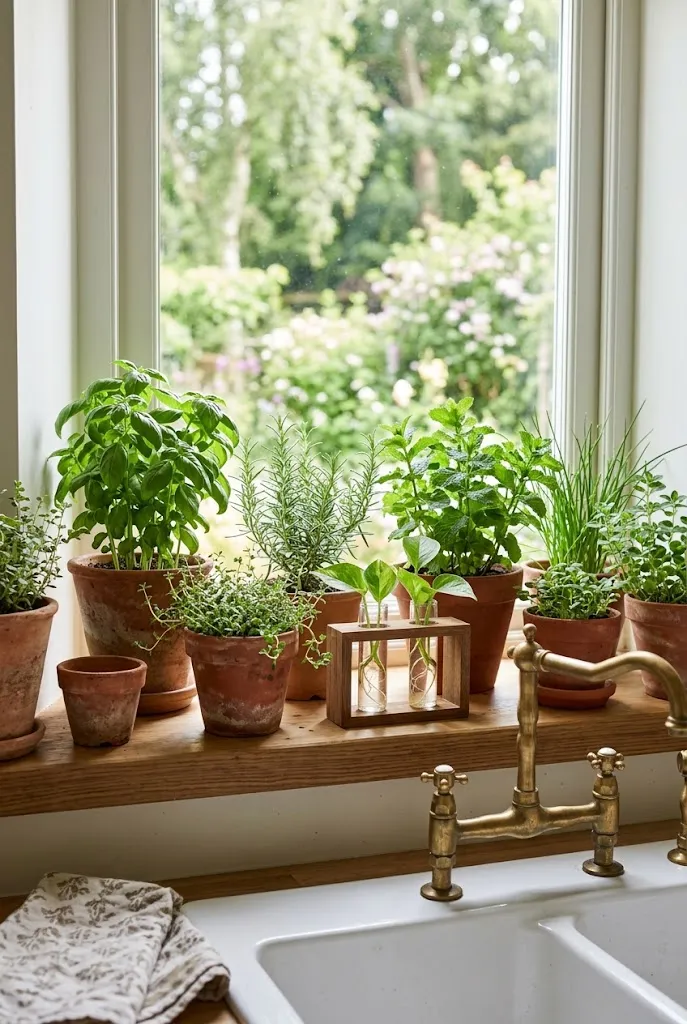
Bringing living plants into the kitchen softens hard architectural lines and provides fresh ingredients right at your fingertips. A deep windowsill above the kitchen sink offers the ideal microclimate for sun-loving culinary herbs.
- Plant basil, rosemary, thyme, and mint in mismatched handmade terracotta pots.
- Place a small wooden propagation station or glass vases with rooting pothos cuttings alongside the herbs.
- Ensure the window sill is treated with a water-resistant finish to withstand daily watering splashes.
12. Beadboard Panelling Painted in Warm Alabaster

Beadboard is a quintessential farmhouse staple, but when rendered in warm alabaster or creamy plaster tones rather than stark white, it gains a softer, more bohemian resonance.
- Install beadboard halfway up the kitchen walls or wrap it entirely around the base of a kitchen island.
- Top the wainscoting with a slim, flat chair rail ledge for displaying small art prints or stoneware jugs.
- Finish the woodwork in an eggshell sheen for easy wipe-down maintenance.
13. Cane-Insert Cabinet Doors for Airy Texture

Solid cabinet doors can visually weigh down a compact kitchen. Replacing select door panels with woven natural rattan cane webbing introduces breathability, texture, and a relaxed, bohemian rhythm.
- Use cane inserts on upper pantry doors or coffee bar cabinets to conceal clutter while maintaining visual lightness.
- Seal the cane with a matte clear coat to protect against kitchen humidity and grease.
- Pair with simple wooden knobs to keep the focus entirely on the woven texture.
14. Soapstone Countertops with Subtle Veining
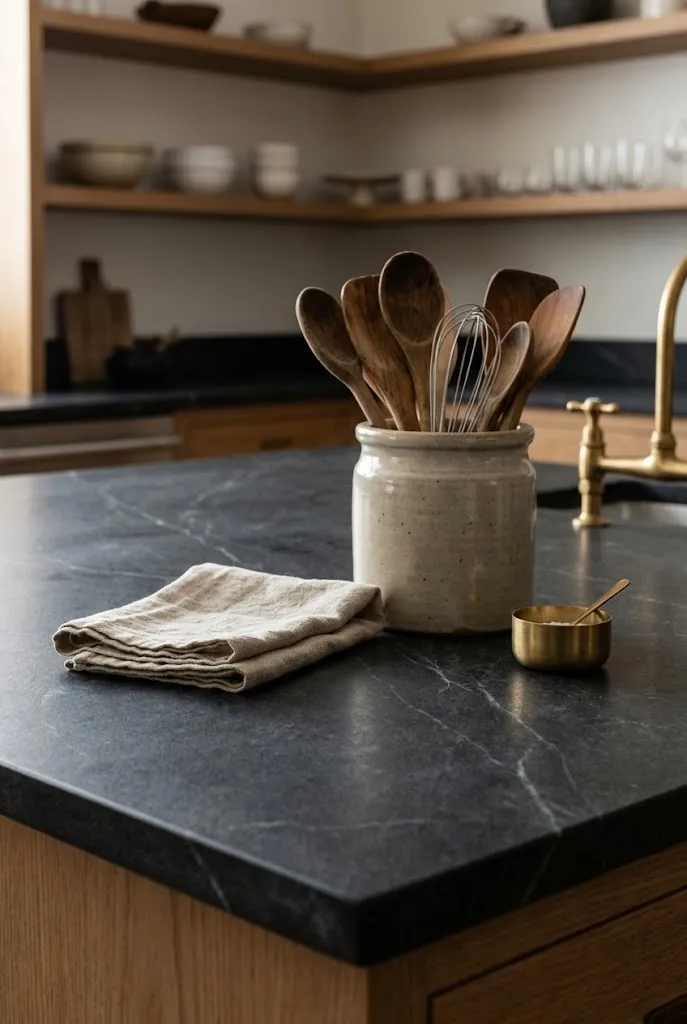
While polished marble and stark quartz dominate many modern kitchens, soapstone offers a softer, matte tactile quality that feels inherently organic and warm. Over time, treating soapstone with mineral oil deepens its charcoal color and enhances its rich, velvety character.
- Embrace minor scratches and dings as part of the stone’s natural, living patina.
- Pair soapstone slab counters with matching integrated stone sinks for a seamless, artisan look.
- Contrast the dark charcoal stone with warm oak shelving and unlacquered brass fixtures.
15. Oversized Ceramic Vases with Dried Botanical Stems
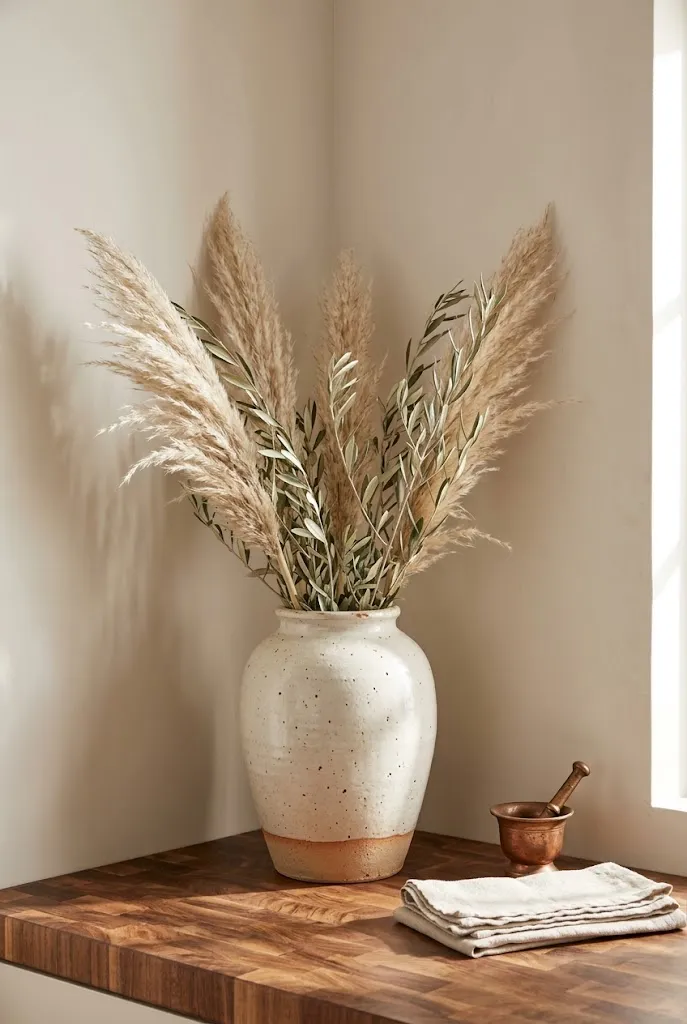
Kitchen counters often accumulate clutter. Replacing utilitarian countertop gadgets with large, handcrafted ceramic vessels filled with sculptural dried botanicals introduces height, organic movement, and sculptural art.
- Look for heavy, wheel-thrown ceramic jugs featuring speckled glazes or raw, unglazed terracotta bases.
- Fill them with dried pampas grass, olive branches, eucalyptus stems, or dried wheat stalks.
- Place the oversized vase in an empty corner or on top of a refrigerator cabinet to draw the eye upward.
16. Distressed Farmhouse Table as a Center Island Alternative

For smaller kitchens or homes prioritizing flexibility over built-in bulk, a vintage distressed wooden farmhouse table can replace a fixed kitchen island entirely.
- Choose a sturdy table with turned legs and a substantial plank top that can handle heavy food prep.
- Store large woven baskets or open bins underneath the table for hidden yet accessible pots and pans.
- Style the center of the table with a simple ceramic bowl filled with seasonal fruit.
17. Unlacquered Brass Bridge Faucet
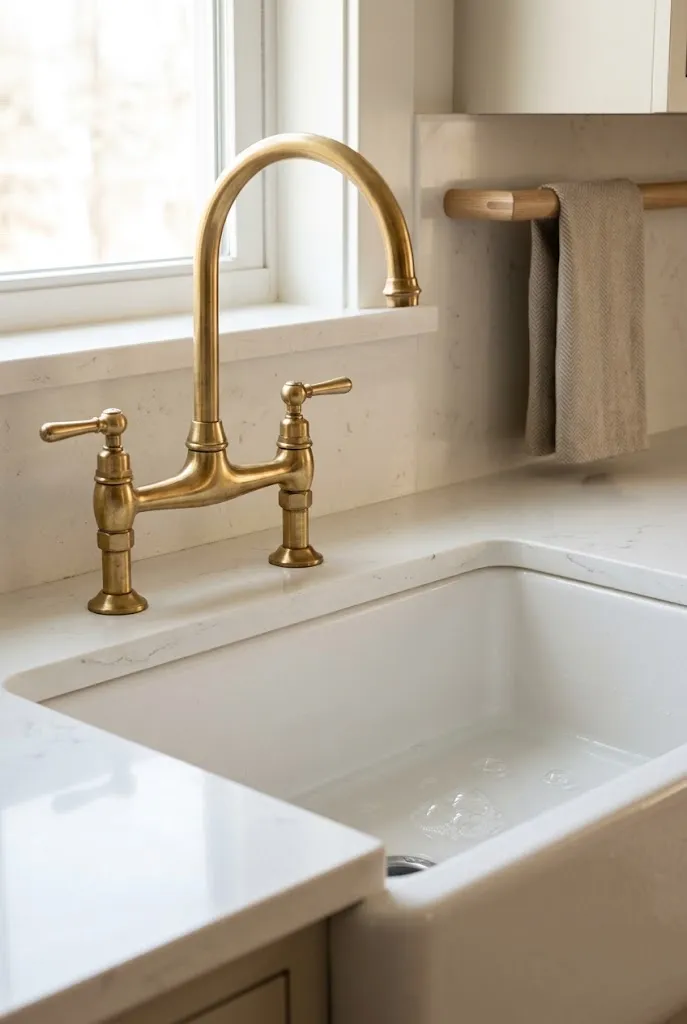
A bridge faucet introduces classic, vintage-inspired architecture to the primary kitchen sink zone. Choosing an unlacquered brass finish ensures that the fixture evolves with your kitchen, developing unique dark spots and golden highlights through everyday use.
- Pair the bridge faucet with a deep fireclay apron-front farmhouse sink.
- Add matching side sprays or soap dispensers finished in the same living brass material.
- Wipe dry after heavy use if you prefer a slower, more even patina development.
18. Linen Roman Shades in Warm Sand and Oat Tones

Kitchen windows often feature cold blinds or bare glass. Softening the window frame with relaxed linen Roman shades introduces effortless texture, privacy, and gentle light diffusion during harsh midday hours.
- Select pure linen or heavy cotton-linen blends in organic hues like oat, flax, sand, or raw silk.
- Hang the shade slightly above the window frame to create the illusion of a taller window opening.
- Keep the pleats unstructured and soft so the shade drapes naturally when raised or lowered.
19. Open-Weave Basket Storage for Pantry Essentials

Plastic food storage containers and cardboard boxes can disrupt the serene, organic aesthetic of an open farmhouse-boho kitchen. Replacing them with structured, open-weave seagrass or rattan baskets keeps pantry goods organized while adding rich tactile warmth.
- Group potatoes, onions, bread, and snacks into labeled or unlabelled shallow woven trays.
- Store extra kitchen linens, cloth napkins, and dish towels in deep lidded baskets on high shelves.
- Mix different basket weaves—such as rush, water hyacinth, and rattan—for an authentic, collected look.