
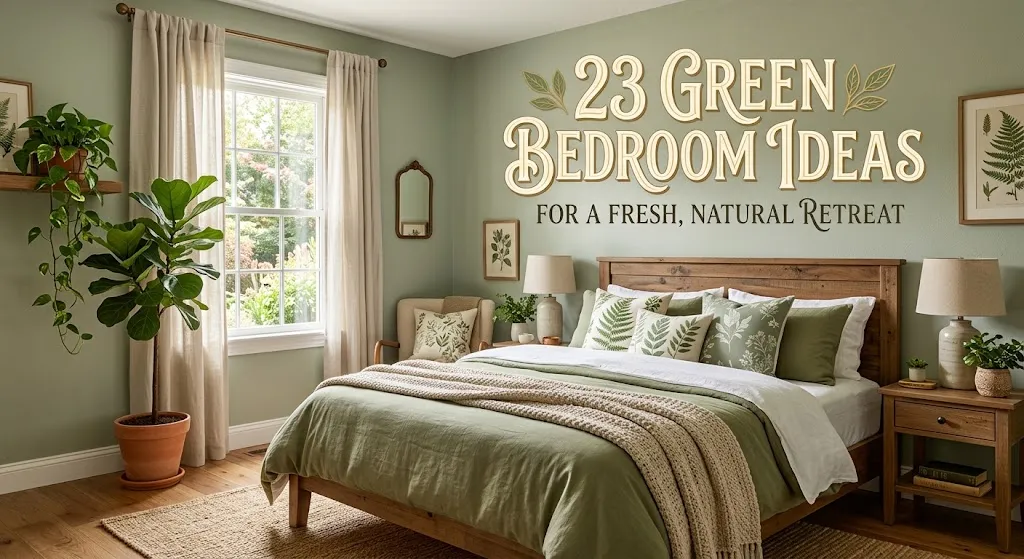
23 Green Bedroom Ideas for a Fresh, Natural Retreat
Green has a remarkable ability to transform a bedroom from a simple sleeping area into a quiet, restorative sanctuary. Rooted in nature, green brings an immediate sense of organic balance, visual rest, and understated freshness into residential spaces. Whether you want to turn a compact city apartment into a soothing haven or add earthy character to a suburban master suite, green adapts easily across traditional, modern, organic, and eclectic design aesthetics.
The secret to a successful green bedroom lies in balancing tone, texture, and light. From misty muted sage and deep botanical moss to moody forest tones and rich olive hues, green works beautifully alongside natural woods, crisp linens, woven fibers, and architectural details. The following 23 ideas explore distinct ways to introduce green into your bedroom—offering practical styling strategies, material pairings, and visual solutions tailored to every space and budget.
1. Frame the Bed with Soft Sage Beadboard
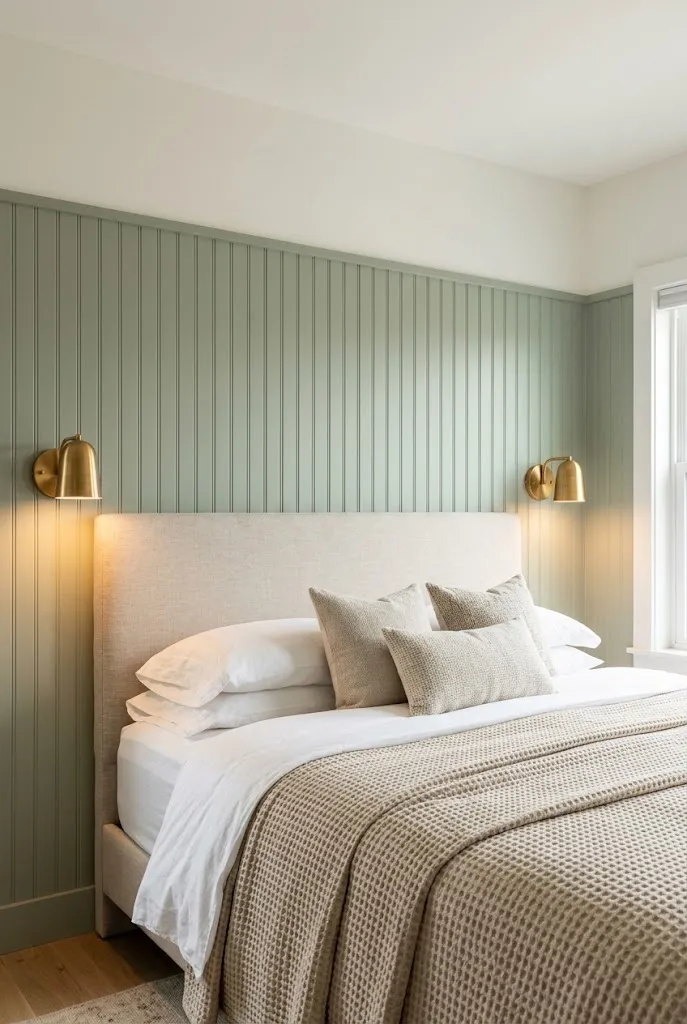
Installing vertical beadboard or tongue-and-groove paneling behind the bed introduces clean architectural texture while softening the wall with a gentle, muted green tone. Paint the paneling in a soft, low-sheen sage green, keeping the upper wall and ceiling a warm creamy white. This two-tone division grounds the bed without darkening the room, making it an ideal strategy for smaller bedrooms or spaces with limited natural light.
To complete the look, pair the sage backdrop with an upholstered linen headboard in oatmeal or raw taupe, layered with crisp white sheets and a waffle-weave cotton blanket. A pair of warm brass wall sconces mounted directly to the paneling adds functional lighting while highlighting the subtle vertical grooves of the woodwork.
2. Envelop the Room in Deep Forest Green
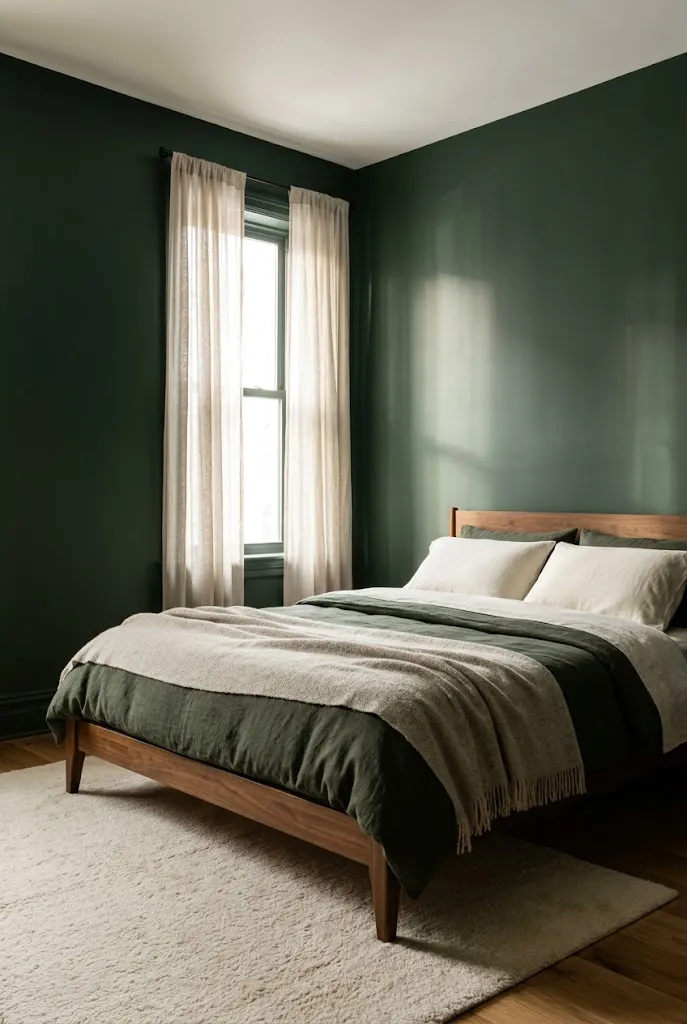
For a dramatic, cozy atmosphere that promotes deep rest, wrap all four walls—and optionally the trim—in a rich, matte forest green. Rather than making a room feel smaller, deep tones recede visually when applied uniformly, creating an enveloping, cocoon-like quality ideal for evening relaxation.
- Color Selection: Choose a deep green with cool charcoal or subtle blue undertones to prevent the space from feeling overly yellow under warm lamps.
- Textile Contrast: Balance the dark walls with lighter bedding in crisp ivory, washed percale, or heather grey linen.
- Warm Wood Accent: Incorporate mid-century walnut or natural oak nightstands to add organic warmth against the deep background.
- Metallic Highlights: Use antiqued brass, brushed copper, or dark bronze door hardware and light fixtures to provide subtle contrast.
Finish the space with a low-profile wool area rug in off-white or subtle camel to bounce light back into the room from the floor level.
3. Style an Olive Green Velvet Accent Headboard

If painting all four walls feels like too large a commitment, focus the color energy entirely on the bed. A tailored, tall headboard upholstered in plush olive green velvet serves as an immediate focal point, introducing tactile softness and visual depth against a neutral backdrop.
Quick Tip: Pair olive green velvet with warm alabaster or chalk-white walls. The contrast highlights the velvet’s subtle sheen without feeling overly stark or harsh.
| Component | Recommended Material / Finish | Visual Effect |
| Headboard | Upholstered Olive Velvet | Rich texture, visual depth, luxurious touch |
| Walls | Warm Alabaster or Cream Paint | Soft backdrop that lets olive tones pop |
| Bedding | Washed White Linen & Flax Throw | Relaxed balance to the structured velvet |
| Nightstands | Bleached Oak or Fluted Ash | Light natural wood tone for balance |
Maintain a restrained pillow arrangement—two standard shams in matching linen and a single lumbar pillow in a muted pattern—to ensure the tailored shape of the headboard remains the primary highlight.
4. Introduce Muted Sage Linen Bedding

One of the most flexible and accessible ways to incorporate green into a bedroom is through layered bedding. Muted sage green washed linen bedding brings an instant touch of organic texture and relaxed comfort without requiring paint, power tools, or permanent structural changes.
Common Mistake: Buying an entire bed-in-a-bag kit where every pillow, sheet, and duvet matches in the exact same green fabric, resulting in a flat, artificial look.
Better Approach: Layer complementary neutral tones alongside the green. Start with a foundation of warm white or light grey percale fitted and flat sheets, add a muted sage duvet cover, and fold an olive or charcoal-hued throw blanket across the bottom. Mixing subtle variations in green and texture makes the bedding feel naturally curated over time.
5. Build an Earthy Olive Color-Blocked Feature Wall
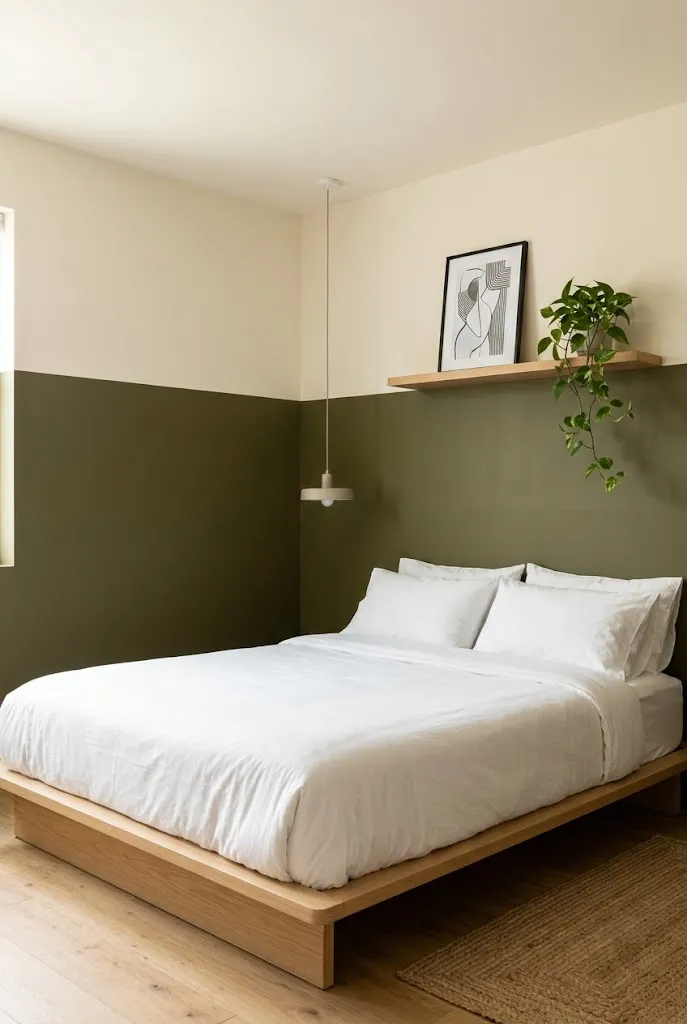
Color blocking allows you to introduce bold olive tones while maintaining bright, light-reflecting upper walls. Painting the lower two-thirds of the main wall in a rich, warm olive green creates a grounded visual foundation, while leaving the upper third white keeps ceilings feeling spacious and airy.
- Measure and Mark: Use a laser level to tape off a horizontal dividing line approximately 48 to 60 inches from the floor (matching window or headboard height where applicable).
- Apply the Olive Tone: Paint the lower section in an earthy olive shade with a flat or eggshell finish.
- Finish with Warm White: Paint the upper wall and ceiling in a matching warm white or cream tone.
- Anchor with Furniture: Position a low natural wood bed or floating shelves across the color line to seamlessly tie the lower and upper sections together.
This approach works especially well in rooms with standard eight-foot ceilings, as the higher white band visually extends the vertical proportion of the room.
6. Curate a Botanical Gallery Wall with Dark Green Frames
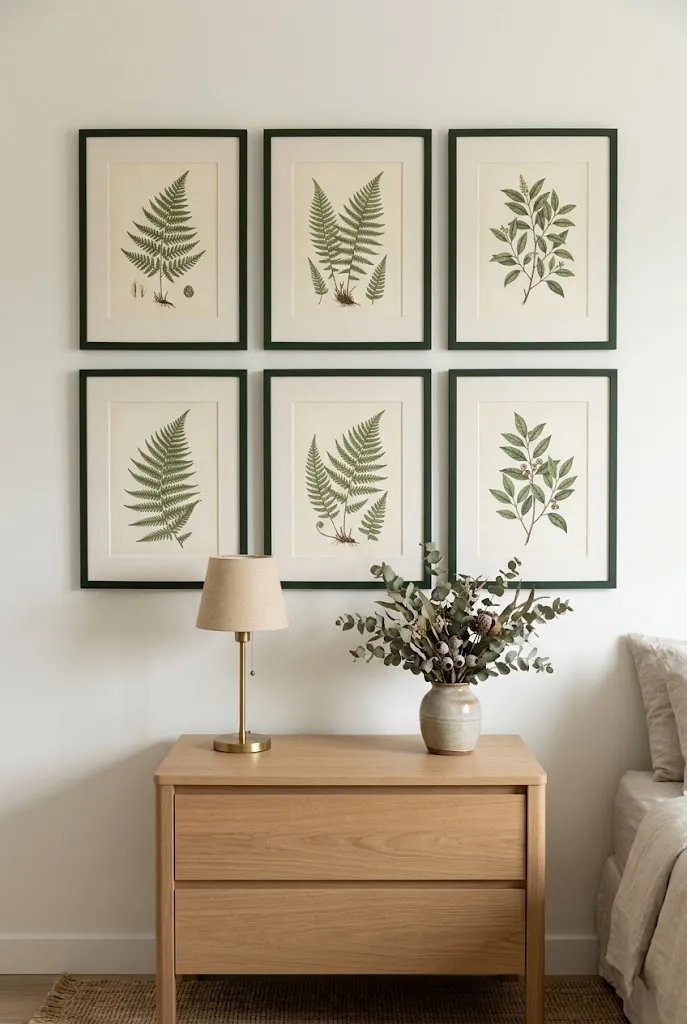
A curated gallery wall featuring botanical prints, fern illustrations, or vintage forest landscapes introduces green through art rather than paint. Using matching dark forest green frames unifies disparate art prints and adds a subtle, intentional pops of color to a neutral room.
- Select 4 to 6 vintage botanical architectural sketches or line-art prints with soft cream backgrounds.
- Use slim, deep forest green wood frames with wide matting to elevate the prints.
- Hang the frames in a clean grid formation directly above the bed or low dresser for a tailored layout.
- Pair with simple brass or black picture lights mounted above the gallery grid to highlight the artwork at night.
This project is exceptionally renter-friendly and can be quickly updated over time without repainting walls.
7. Hang Moody Botanical Wallcoverings
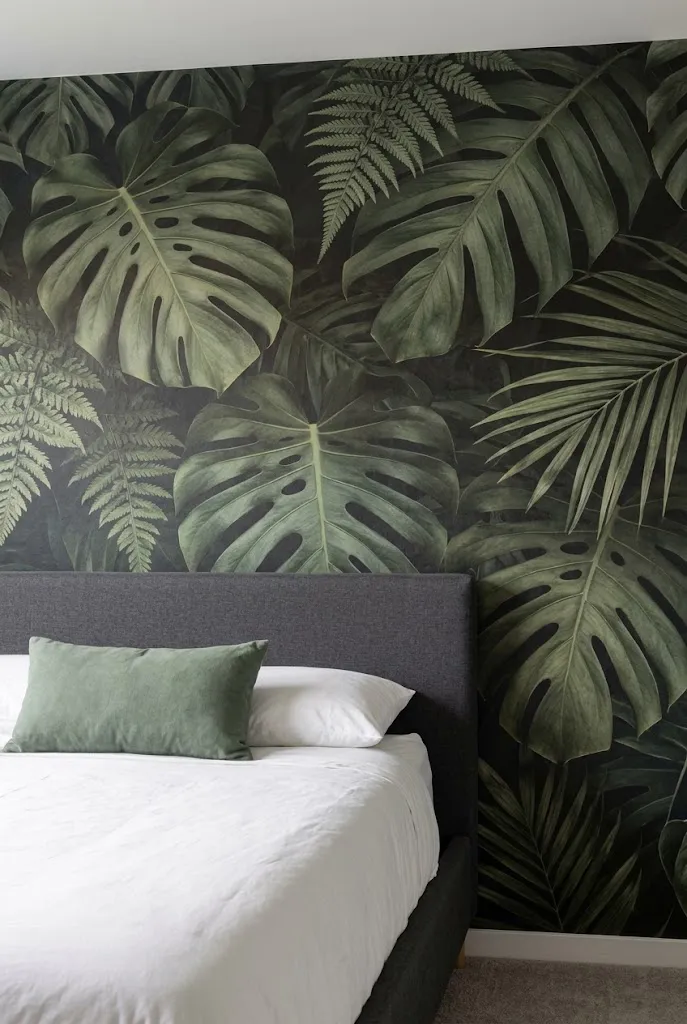
A full-wall botanical wallpaper brings movement, pattern, and rich green tones into the space. Opt for large-scale leaf patterns, misty forest mural landscapes, or subtle hand-drawn botanical motifs on a textured vinyl or woven paper substrate.
For smaller rooms or rentals, consider high-quality peel-and-stick wallpaper applied solely behind the bed or inside a alcove for easy removal down the road.
8. Layer a Deep Moss Green Vintage-Style Rug

Introducing green beneath your feet anchors the entire layout and draws the room’s color scheme together effortlessly. A vintage-inspired or low-pile woven rug featuring faded moss, sage, and soft olive tones provides visual warmth while keeping the rest of the fixed elements neutral.
Best For: Adding warmth to hardwood, concrete, or light laminate floors.
Investment: Accessible to Moderate (depending on machine-woven vs. hand-knotted wool).
Visual Effect: Soft, grounded foundation that pulls green downward into the space.
Select a size large enough to extend at least 18 to 24 inches beyond both sides and the foot of the bed, ensuring a soft, warm landing spot every morning.
9. Accent with Deep Olive Painted Trim and Doors

Instead of painting the walls green, reverse the traditional color placement by keeping the walls a crisp alabaster white and painting all interior trim, door casings, baseboards, and crown molding in a deep, satin olive green.
This architectural framing technique brings custom character to standard builder-grade rooms without darkening the overall wall area.
- Use a satin or semi-gloss finish on the trim for durability and subtle light reflectivity.
- Match the bedroom door to the trim color for a cohesive, custom-built look.
- Pair with simple unlacquered brass hardware that will naturally patina over time.
10. Frame Windows with Soft Sage Linen Drapery

Floor-to-ceiling drapery in a soft, tailored sage green linen breathes gentle motion and organic texture into the room while softening hard architectural edges.
- Rod Placement: Mount drapery hardware close to the ceiling line (at least 4 to 6 inches above the window frame) to visually heighten the space.
- Length: Ensure drapes lightly kiss or puddle slightly on the floor for a casual, elegant drop.
- Fabric Weight: Choose medium-weight unlined or light-filtering linen to allow soft, diffused green-tinted sunlight to illuminate the room during the day.
Complement the curtains with natural woven bamboo or timber roman shades mounted inside the window frame for light control and layered texture.
11. Design a Built-In Moss Green Storage Wall
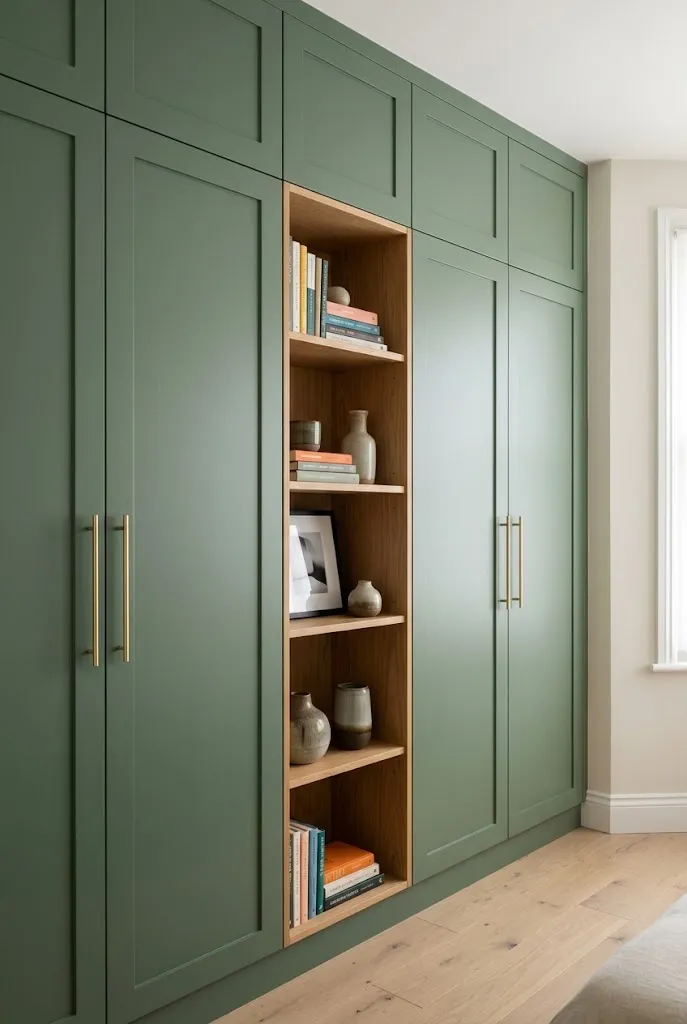
Maximize functionality and aesthetic impact by painting a wall of custom or modular built-in wardrobe cabinetry in a soft, matte moss green tone.
Quick Facts:
- Ideal Use: Primary bedrooms needing extra closet storage without sacrificing design.
- Color Pairing: Works exceptionally well with natural wood interiors and warm brass door pulls.
- Practical Benefit: Integrated storage reduces free-standing furniture clutter, keeping the visual emphasis on the continuous green cabinetry face.
To keep the millwork feeling lightweight, incorporate open center shelving for books, ceramic vessels, and framed photos amidst the closed storage doors.
12. Mix Warm Sage with Terracotta and Rust Accents
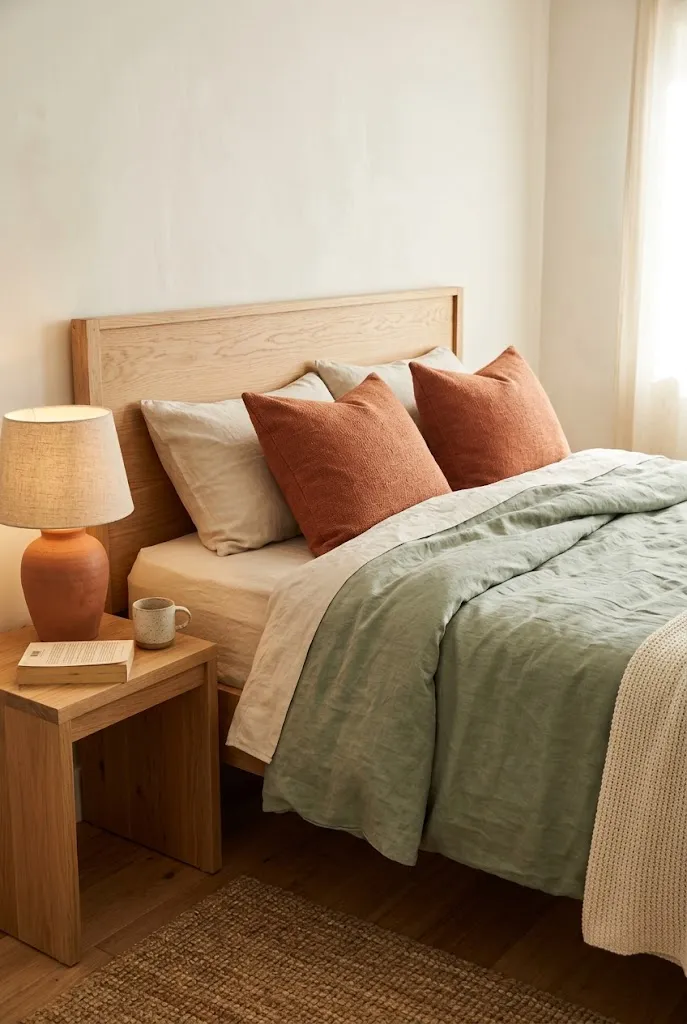
Pairing soft sage green with warm terracotta, burnt orange, or rust accents creates an earthy, grounded palette inspired by high-desert landscapes.
- Use sage green as the dominant color on walls or large textiles (like duvets or area rugs).
- Introduce rust or terracotta through smaller accents such as throw pillows, lumbar cushions, ceramic table lamps, or woven wall tapestries.
- Ground the combination with raw wood elements, leather cabinet hardware, and natural jute rugs.
This color pairing adds immediate visual warmth to north-facing bedrooms that might otherwise feel chilly or dim under cool natural light.
13. Install a Muted Olive Shiplap Accent Wall

Horizontal or vertical shiplap in a muted olive finish offers a relaxed, rustic-modern aesthetic that adds dimensional shadow lines to the bedroom.
Do:
- Use wide-plank boards (6 to 8 inches) for a modern, clean look.
- Paint in a flat or low-eggshell finish to highlight the subtle texture without creating harsh glare.
- Pair with simple modern furniture and black metal lighting to keep the look contemporary.
Don’t:
- Over-decorate the shiplap with cluttered small wall art—let the shadow lines serve as the pattern.
- Use glossy paint finishes, which can look artificial and emphasize minor board imperfections.
14. Soften the Room with a Pale Pistachio Ceiling

Painting the ceiling—often called the fifth wall—in a subtle, pale pistachio green draws the eye upward while leaving the main walls neutral and reflective.
This technique is particularly effective in rooms with white or off-white walls, as it adds unexpected color overhead without disrupting the clean, spacious feel of the space at eye level.
Editor’s Note: Keep the ceiling paint finish in a ultra-flat or dead-flat formula. This prevents artificial glare from ceiling fixtures and hides minor drywall tape seams or ceiling texture flaws.
Pair the pistachio ceiling with a woven cane or rattan pendant fixture to cast warm, organic shadows across the light green ceiling when illuminated in the evening.
15. Create a Moody Eucalyptus Nightstand Corner

Focusing color into a tight, curated corner adds distinct character without altering the entire room’s layout. Paint an existing vintage nightstand or wooden side table in a rich eucalyptus green.
- Upcycling Strategy: Sand down a secondhand wood nightstand, apply a stain-blocking primer, and coat with a durable satin furniture paint in eucalyptus or dark sage.
- Hardware Upgrade: Swap existing hardware for solid brushed-brass knobs or leather strap pulls.
- Styling the Top: Arrange a small ceramic vase with fresh eucalyptus branches, a brass task lamp, and a small stack of linen-bound books to mirror the furniture’s tone.
This creates an attainable weekend project that delivers immediate visual punch alongside the bed.
16. Layer Natural Houseplants and Botanical Life
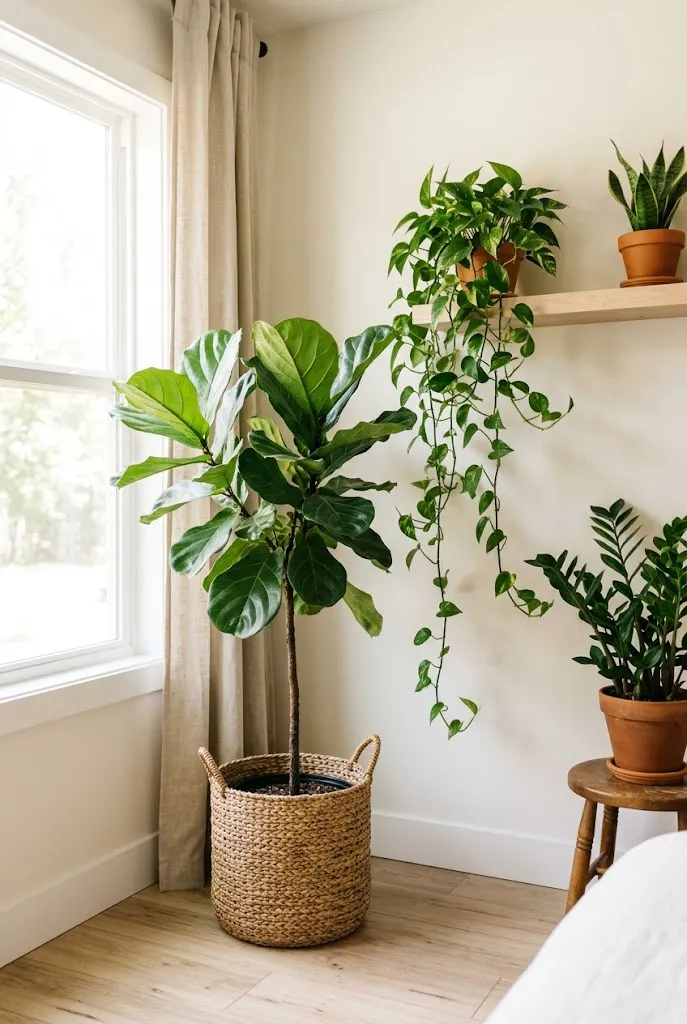
Beyond paint and textiles, live foliage brings actual living green into your retreat—improving air quality while adding authentic organic shapes that no synthetic textile can replicate.
| Plant Species | Ideal Placement | Light Need | Visual Form |
| Fiddle Leaf Fig | Floor corner near window | Bright, indirect sunlight | Architectural, large glossy leaves |
| Pothos / Philodendron | High floating shelf or dresser edge | Low to medium light | Trailing vines, cascading movement |
| Snake Plant | Beside nightstand or wardrobe | Tolerates low light | Vertical upright structural fronds |
| ZZ Plant | Darker corners or side tables | Low light | Deep green, waxy structured stems |
Group plants in varied ceramic, terracotta, and woven seagrass pots at different heights to create a mini indoor garden display that breathes vitality into the room.
17. Pair Deep Jade Green with Warm Walnut Furniture

Deep jade green carries subtle jewel-tone richness without feeling garish when paired with dark, mid-century walnut furniture. The reddish-brown tones inherent in natural walnut wood complement the cool green undertones of jade perfectly.
- Paint the main focal wall in a rich matte jade shade.
- Anchor the wall with a walnut platform bed featuring clean horizontal lines and visible wood grain.
- Keep bedding crisp and simple using off-white, ivory, or warm cream tones to maintain visual balance between the wood and paint.
This combination creates a retro-modern, sophisticated feel that feels warm and established.
18. Hang a Custom Green Fabric Canopy or Headboard Drapery
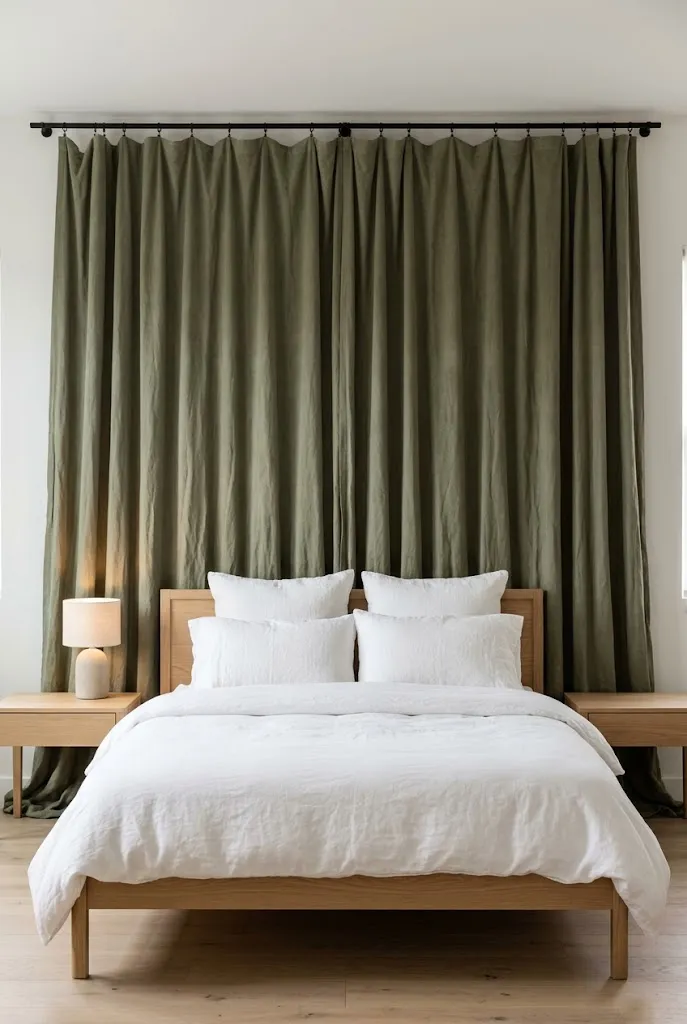
Add soft architectural movement behind the bed by suspending a tailored fabric canopy or wall drapery made from light sage or olive cotton canvas.
- Mount a slim black iron curtain rod horizontally behind the headboard near the ceiling.
- Hang a panel of heavy-draped sage cotton or linen fabric behind the bed to serve as a soft textile wall cover.
- Allow the fabric to puddle gently on the floor behind nightstands for a relaxed, romantic cocoon effect.
This approach works exceptionally well in rentals or historic homes where painting or installing permanent wall panels isn’t feasible.
19. Introduce Dark Forest Green Board and Batten Paneling
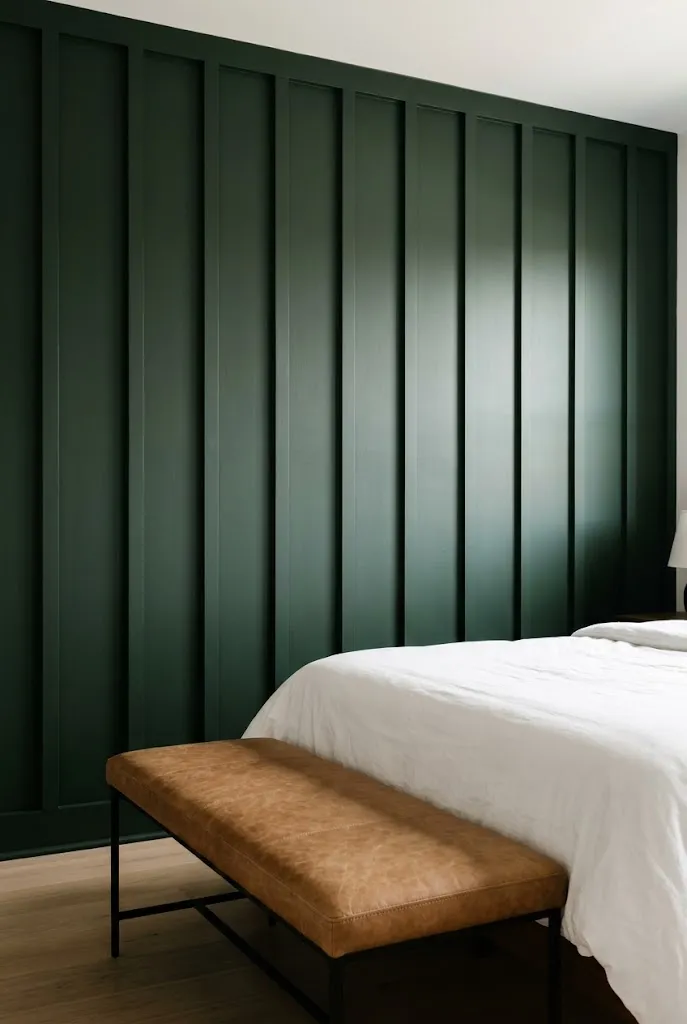
Board and batten paneling introduces bold geometric shadow lines and traditional craftsman character. Painting the battens and wall surface in dark forest green turns structural woodwork into a statement design feature.
Quick Tip: Space vertical battens 12 to 16 inches apart across the entire wall width to maintain balanced proportions without overcrowding small spaces.
Complement the dark green woodwork with mid-toned leather accents, such as a camel leather bench placed at the foot of the bed or cognac leather cushion ties.
20. Introduce Seafoam Green for a Coastal Breeze
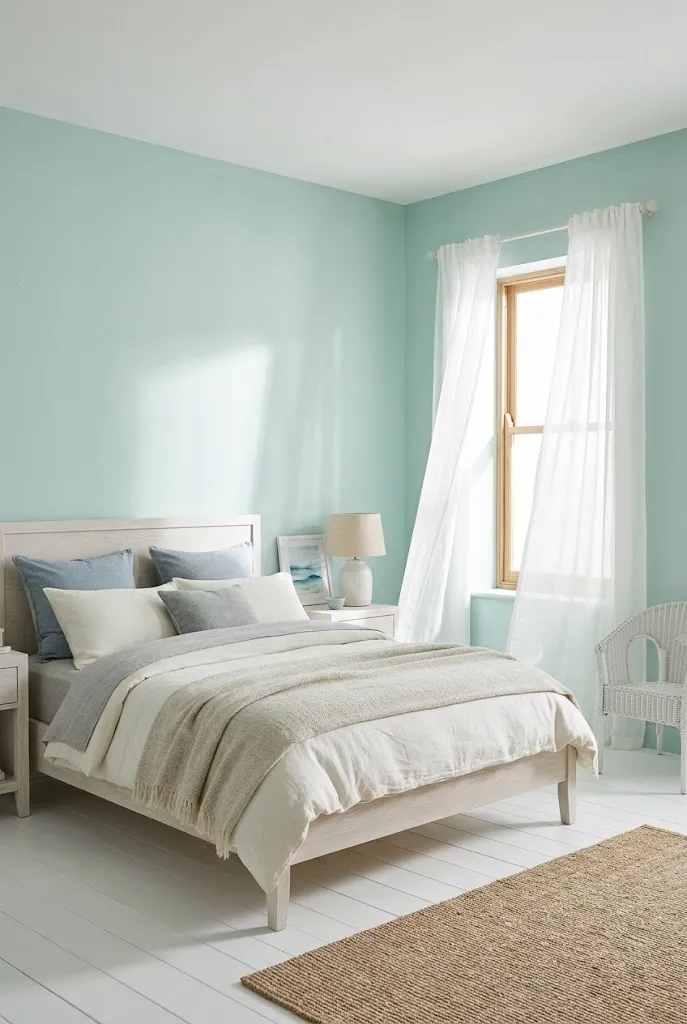
For light-filled, airy bedrooms, soft seafoam green offers a refreshing alternative to earthier sage and olive tones. Seafoam combines pale green with subtle blue undertones, evoking a relaxed, breezy coastal feel.
- Wall Color: Choose a pale, washed seafoam finish with a chalky flat sheen.
- Furniture: Combine with whitewashed oak, bleached pine, or white painted wicker furniture.
- Textiles: Layer soft ivory cotton, slubby linen, and light chambray accents.
Keep window treatments light and semi-translucent to maximize natural daylight streaming into the space.
21. Style an Olive Green Window Seat or Reading Nook

If your bedroom features a bay window, dormer alcove, or unused corner, turn it into a dedicated cozy retreat by installing an olive green window seat cushion.
Common Mistake: Using thin foam cushions that compress immediately and look wrinkled after brief use.
Better Approach: Specify high-density 3-inch foam wrapped in a heavy-duty washed olive linen or velvet cover with piped edges and a hidden zipper.
Add a couple of small woven throw pillows and a swing-arm brass wall lamp to transform an underutilized nook into a functional reading spot.
22. Incorporate Green Glazed Ceramic Table Lamps

If you prefer to keep walls, bedding, and rug neutrals completely untouched, introduce green in small, deliberate decorative accents using artisan glazed ceramic table lamps.
- Look for table lamps featuring hand-applied moss green, hunter green, or celadon reactive glazes that reveal subtle tone variations.
- Pair with simple natural linen or paper drum shades to keep the focus on the ceramic body.
- Place twin green lamps on matching wood nightstands to frame the bed symmetrically.
The glossy glazed surface reflects soft ambient light, adding subtle shine and color against matte wood or painted backgrounds.
23. Balance Green Walls with Natural Cane and Woven Textures
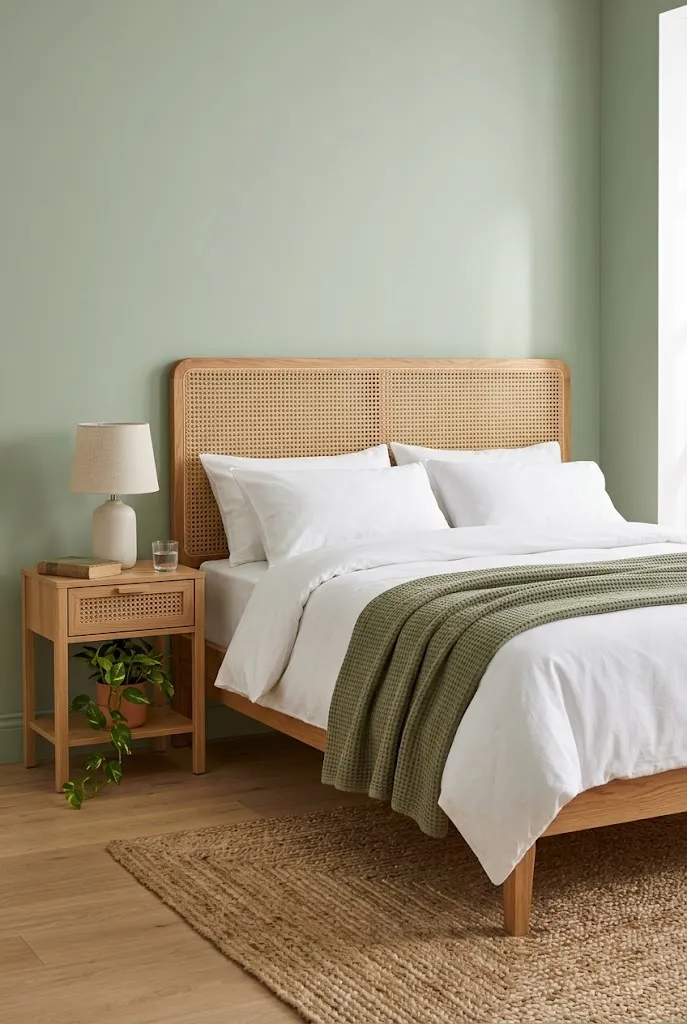
Green and woven natural fibers are a natural match. When painting a room in sage, moss, or forest green, incorporate cane, rattan, jute, and seagrass furnishings to prevent the space from feeling heavy.
Editor’s Note: Woven materials break up solid blocks of paint by introducing micro-textures and natural honey tones that balance cool green undertones.
- Furniture: Choose a bed frame with a woven cane headboard or nightstands with rattan door inserts.
- Flooring: Layer a natural jute rug beneath the bed foundation.
- Lighting: Hang a woven bamboo pendant light centered over the bed area.
This material combination brings an effortless organic feel to the room, making it feel grounded, timeless, and deeply serene.


